Cleaned and Dried, Ready-to-Craft Gourds For Sale
How to Dry Gourds
During harvest you will notice your gourds are heavy. That is because they are 90% water.
During the curing process, this water evaporates out through the porous woody shell and causes molding to occur on the surface. For this reason it is advisable to keep the gourds outside.
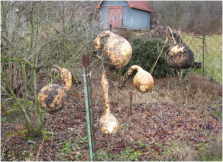
Gourds hanging on fence to dry.
People allergic to mold should be very careful when handling gourds as they are drying. Also be aware of the allergic reactions that can occur when cleaning gourds. It would be a good idea to use gloves or enlist the aid of someone without allergies to clean them for you.
The drying times for gourds can vary depending on size and variety of gourd. Weather conditions also play a part in the drying process. You may be waiting six weeks to a year for the gourd to be fully dried.
Don't worry about letting your gourds out in freezing weather. If they are good, mature gourds, it will not hurt them. If they are damaged by freezing they wouldn't have been worth much for crafting anyway.

Gourds on picnic table going through molding stage.
It is best to keep gourds off the ground to allow for air circulation around them. If your gourd goes soft during the drying process it wasn't mature enough and you can toss it out. Sometimes they will dry but you can poke your finger through the shell. Those might as well be tossed also.
Gourds are dry when they feel lighter, seeds shake, and the mold on the outside is all dry. There are times when it is difficult to determine if the gourd is truly dry because not all seeds will be loose and some shells may be very thick and therefore still feel heavy.
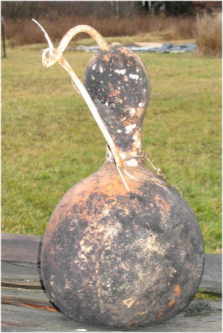
Experience with gourds will help to determine when they are dry. You may have been told to drill or poke a small hole in the gourd to help speed the drying process. There are two thoughts on this. One is that it is not a good idea because they will attract mold or fungus and cause decay but yet I've just heard from others that it helped when cleaning the inside of the gourd. Maybe you can try it both ways just to be sure you don't lose your whole crop.
One way you may want to speed up the drying process is called green cleaning or scraping. A few weeks after harvesting the outer skin begins to loosen. You can tell by the change of color. At this time, take the outer skin off by scraping with a dull knife. This will dry the gourd faster and leave a lighter surface that is great for woodburning.
One word of caution: if you are not sure of the thickness of the gourd, this may not be a good process. The speedy drying can cause cracking in the thinner shelled gourds. I found this out when I ruined lots of gourds by green cleaning!
A good book for all kinds of information about gourds is "The Complete Book of Gourd Craft" by Ginger Summit and Jim Widess. This is the first gourd book I purchased and it really gave me a good start.
You will learn the different kinds of gourds, their historical use, how to grow and craft with them. It shows you with plenty of pictures the different techniques that can be used on gourds and has a few tutorials.
If you are in need of gourds now and don't have any available or if you need them already cleaned, you can check out the gourds I have available.